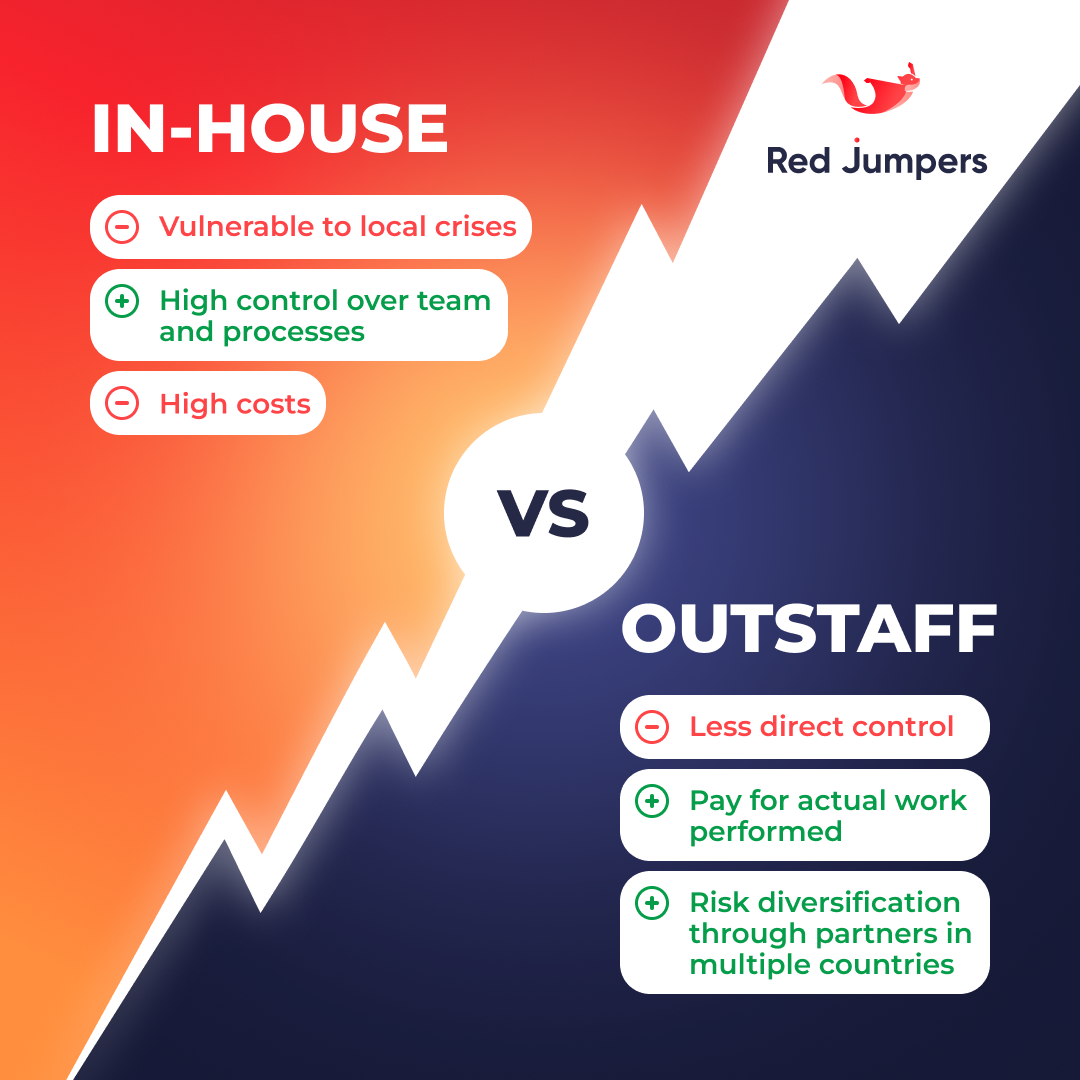
Finding skilled developers has never been more challenging. As projects grow more complex and deadlines get tighter, many companies face the same question: how to scale their teams quickly without sacrificing quality? That’s where IT staff augmentation services come in — a flexible collaboration model that allows you to extend your team with vetted professionals, exactly when you need them. However, choosing the right agency is not just about speed or cost. The right partner can become a long-term strategic ally who strengthens your delivery capacity and supports your business growth. The wrong one can slow you down.
Over the years, we’ve seen both sides of the story — agencies that truly empowered their clients’ projects, and others that caused unnecessary delays and setbacks. Based on that experience, we’ve gathered a few practical insights to help you choose the right partner, avoid common pitfalls, and make your collaboration a success from day one.
1. Define your goals and expectations
Before you start searching for a supplier, clarify exactly what you need — whether it’s short-term project support or a long-term team extension. Do you need one senior developer or a full cross-functional team? Setting clear goals helps you choose a partner that understands your requirements and can tailor the sourcing process accordingly. Also, think about your desired level of involvement. Some companies prefer to manage augmented staff directly, while others rely on the agency to handle supervision, onboarding, and delivery management.
2. Check their experience and industry focus
A strong track record is one of the most reliable indicators of a company`s success. Look for an agency that has experience working with companies in your industry or with similar tech stacks. For example, if you’re developing a fintech product, an agency that understands data security, compliance, and performance optimization will be far more valuable than one without relevant industry experience. Review case studies, client testimonials, and references to see whether their experience aligns with your needs.
3. Assess the vetting and matching process
Speed matters — but quality matters more. Ask how the agency evaluates its developers before presenting them to clients. A mature partner will have a structured vetting process that includes technical testing, soft skills assessment, and cultural fit evaluation. Transparency is key. You should clearly understand how candidates are evaluated and how the agency ensures they meet your technical and communication standards.
4. Evaluate communication and support
Effective collaboration doesn’t end with signing the contract. The best agencies provide continuous support throughout the engagement — from candidate selection to onboarding, performance monitoring, and replacement if needed. Pay attention to how responsive the team is during your first interactions. Clear communication, regular updates, and proactive feedback are all signs of a partner you can rely on.
5. Consider flexibility and scalability
Business needs change, and so should your team. Choose an agency that offers flexible engagement models — whether you want to scale up quickly or reduce capacity once a project ends. Clarify terms like minimum contract duration, notice periods, and replacement policies in advance to avoid surprises later. A reliable agency should help you adapt to changing priorities without friction or long delays.
6. Look at cultural and time zone compatibility
Even the most talented developer can struggle in a team if communication styles or work habits don’t align. Make sure the agency offers talents that fit your company culture and time zone requirements. Nearshore or regional partners can often provide smoother collaboration than distant offshore providers, especially when real-time communication is important.
7. Review transparency in pricing
Pricing models can vary widely across agencies. Some charge hourly rates per developer, others include additional management or service fees. Ask for a detailed breakdown of costs to ensure there are no hidden charges. A transparent agency will clearly explain what’s included — from recruitment and HR support to infrastructure and communication tools.
8. Think long-term
While staff augmentation often starts as a short-term solution, many companies turn these relationships into lasting partnerships. Choose an agency that not only fills immediate gaps but also understands your long-term goals and can grow with you. When your partner consistently delivers great talent, fast communication, and reliability, they become more than a vendor — they become part of your extended team.
Final Thoughts
Selecting the right IT staff augmentation agency isn’t just about hiring developers quickly. It’s about finding a trusted partner who understands your business, values quality, and supports your success. By focusing on experience, communication, flexibility, and transparency, you’ll build a partnership that helps your organization scale effectively — no matter how fast the tech world moves. And if you’re looking for support in finding specialists who genuinely match your technical needs, work style, and long-term goals, Red Jumpers can help — this is exactly what we specialize in: connecting companies with the right talent and ensuring a seamless start from day one.